

Breast size (micromastia)
Breast augmentation offers the ability to increase volume, achieving a more balanced silhouette that highlights the body's curves and delivers the desired aesthetic result.
ABOUT
Get to know the surgeon, his philosophy, and how every treatment plan is designed individually.
MORE ABOUT THE SURGEONNON-SURGICAL
Face and body treatments for natural renewal, improved skin texture, and enhanced features.
ALL TREATMENTSAESTHETIC SURGERY
Breast, face and body procedures organised clearly so every visitor finds exactly what they need.
ALL PROCEDURESBLOG
Selected articles helping visitors understand treatments, procedures, and choices.
ALL ARTICLESA comprehensive guide to botulinum toxin treatment areas, aesthetic and therapeutic.
READ ARTICLE NON-SURGICALHow hyaluronic acid and collagen biostimulators rejuvenate the face without surgery.
READ ARTICLECONTACT
A clear path to booking an appointment, calling the clinic, or sending your question.
BOOK AN APPOINTMENTBreast Surgery
A full, natural and harmonious breast based on your own proportions.
Overview
Breast augmentation is a surgical procedure with a high safety profile when performed by a qualified doctor aimed at increasing breast size. Its purpose is to give a woman a symmetrical breast, proportionate to her body type, that will boost her confidence. Breast augmentation is performed with implants or fat transfer and is suitable for all women over the age of 18.
What We Correct
The procedure aims for a harmonious restoration of breast shape and volume, adapted to each woman's individual needs and anatomy.
Below are the four main cases where breast augmentation offers substantial benefits:
Breast augmentation offers the ability to increase volume, achieving a more balanced silhouette that highlights the body's curves and delivers the desired aesthetic result.
It is extremely common for the two breasts to have small differences in size or shape. When this difference is noticeable, however, it can create insecurity. Through the use of different implant sizes or combined techniques, the breasts are balanced and gain symmetry and harmony.
Changes in the body after significant weight fluctuations or the period of pregnancy and breastfeeding often lead to reduced glandular tissue and loose skin. Breast augmentation restores lost volume and, to some degree, corrects breast sagging. For more significantly sagging breasts, augmentation is combined with a breast lift.
Within the context of oncological reconstruction, breast augmentation plays a decisive role in psychological and physical recovery. After a mastectomy, reconstructive surgery helps rebuild the shape of the breast, allowing the woman to feel whole again and significantly improving her quality of daily life.
Beauty by Design
Breast augmentation is planned individually — implant type, size and placement are chosen based on your anatomy and aesthetic goals.
Preparation before the procedure
Before surgery, a consultation has already taken place during which the patient expresses her wishes regarding the size and shape of the breast she desires after the procedure. With guidance from the plastic surgeon, she tries different implant sizes and shapes. The doctor carries out specific measurements that are decisive for the final implant selection, which is always made on the basis of patient safety and aiming for a result suited to her body type.
TECHNIQUE
In the week before surgery you will be asked to carry out all the necessary blood tests, an electrocardiogram and a mammogram. On the day of the procedure:
The procedure begins with the administration of general anaesthesia. The area is then meticulously cleaned with antiseptic, while the surgeon makes the final necessary markings on the skin, confirming the procedure plan.
The surgeon makes the incision at the pre-agreed location (inframammary fold, periareolar or axillary area).
Through a small incision of approximately 3 cm, the surgeon creates the appropriate space (pocket) for the implant. The pocket can be created either below the pectoralis major muscle or below the gland, depending on the patient's anatomical type. After creating the pocket, the implant is inserted precisely and placed in the correct position to support a natural-looking aesthetic result.
Once symmetry and the correct implant position have been confirmed, the surgeon closes the incisions with fine, intradermal sutures to support healing. The procedure is completed with the placement of a special compression bandage or supportive bra, which helps stabilise the result during the first days of recovery.
OPTIONS
The choice between implant placement and fat transfer depends on the desired volume, skin quality and the availability of sufficient fat reserves in the body. The main characteristics of the two methods are as follows:
Offers the possibility of specific and predictable volume increase, regardless of the patient's body type. It is a suitable choice for those who want a noticeable change in size or correction of significant volume loss.
Your own fat is used, collected by liposuction from areas such as the abdomen or thighs, purified and transferred to the breast. This method delivers a natural-looking result in feel and appearance, with no foreign bodies, while simultaneously achieving local sculpting in areas where there was excess fat.
This method cannot provide a dramatic increase in breast size, as it is limited by the amount of fat available to the patient and the survival rate of fat cells after transfer. It is usually more suitable for women who want a subtle enhancement (typically half to one cup size) and have good skin quality.
In some cases, the two methods can work in a complementary manner. Fat transfer can be used in combination with implants to "soften" the result or cover areas where the skin is very thin, delivering a more natural and symmetrical final shape that combines the advantages of surgical precision with the benefits of autologous tissue.
Beauty by Design Choice: We use certified silicone implants from Mentor, which meet all safety specifications and have received FDA approval. Cohesive gel implants are designed to retain their shape. In the event that the implant ruptures, the gel usually remains within the implant shell or escapes into the breast pocket outside the shell.
Procedure Details
AFTER SURGERY
The recovery period after breast augmentation is usually smooth and well tolerated, allowing the patient to gradually return to her daily life. The following are the key guidelines for the recovery period:
The patient will need to wear a special compression bra around the clock for approximately 6 weeks. This helps stabilise the implants, reduce swelling and better shape the new breast contour.
Suture removal is not required, as exclusively absorbable materials are used that are naturally broken down by the body. The patient can shower safely just 2 days after surgery.
Return to work can take place within 5–7 days, depending on the nature and demands of the occupation. The patient can also drive normally, provided she feels no discomfort and has stopped taking strong painkillers.
Although the patient can immediately return to light everyday activities, it is essential to avoid intense physical exercise and lifting weights over 10 kg for a period of 6 weeks, in order to protect the surgical area.
Results
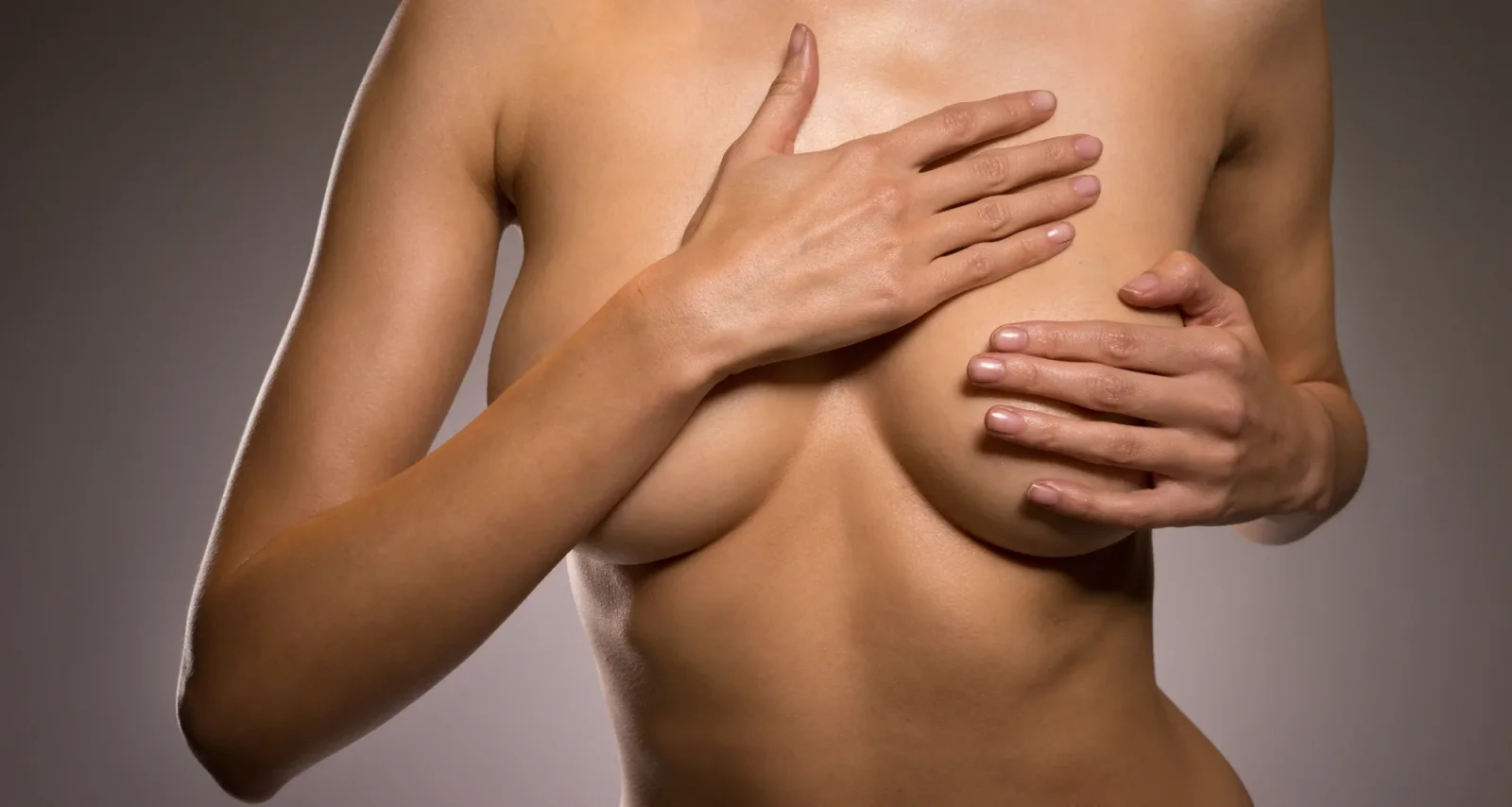
Representative breast augmentation cases. The result is personalised based on body type, desired size and anatomy.
FAQ
Implants do not have a specific lifespan or expiry date. They are designed for long-term use. There is also no specific guideline or practice for replacing implants. We can observe that older-generation implants used frequently lasted many years, often for decades. Newer-generation implants should theoretically perform even better over time.
Of course, a woman considering breast augmentation should not cut corners on this, as high-quality silicone implants offer a more natural result, better shape and a high level of safety.
Breast augmentation is considered safe when performed by a qualified plastic surgeon, but it carries risks like any surgery. Possible complications include capsular contracture (hardening around the implant), haematoma, infection, changes in nipple sensation and possible future implant rupture.
This is why the choice of plastic surgeon is very important — they must be experienced and specialised and use verified, approved materials.
Women with silicone implants should monitor their breasts for the possibility of cancer using the same routine they would follow without augmentation. Mammography, breast ultrasound and physical examination are the standard monitoring methods. Breast implants do not prevent mammography; inform the radiologist, as additional views may be needed.
Since the implants are placed through a very small incision in the inframammary fold, and not through a periareolar incision, the risk of damaging the milk-producing glands is minimal. Thus the ability to breastfeed is usually preserved.
Discuss your needs, goals and available options with the doctor, so that a safe and personalised plan can be formed.
Results vary from person to person and cannot be guaranteed. Suitability for any treatment is determined by the doctor after a personal consultation.