Botulinum toxin works by temporarily relaxing the muscles. Injections into the facial muscles, for example, reduce the formation of so-called "dynamic wrinkles" — those created by facial expressions. Fewer dynamic wrinkles can contribute to fewer static wrinkles over time, and a more youthful appearance for longer.
Botulinum toxin was originally applied to the muscle groups of the upper face. In recent years, however, the treatment areas have grown considerably. What matters most is choosing a plastic surgeon with substantial experience — because although the toxin's effect fades over the following months, the result isn't immediately reversible.
Upper face areas
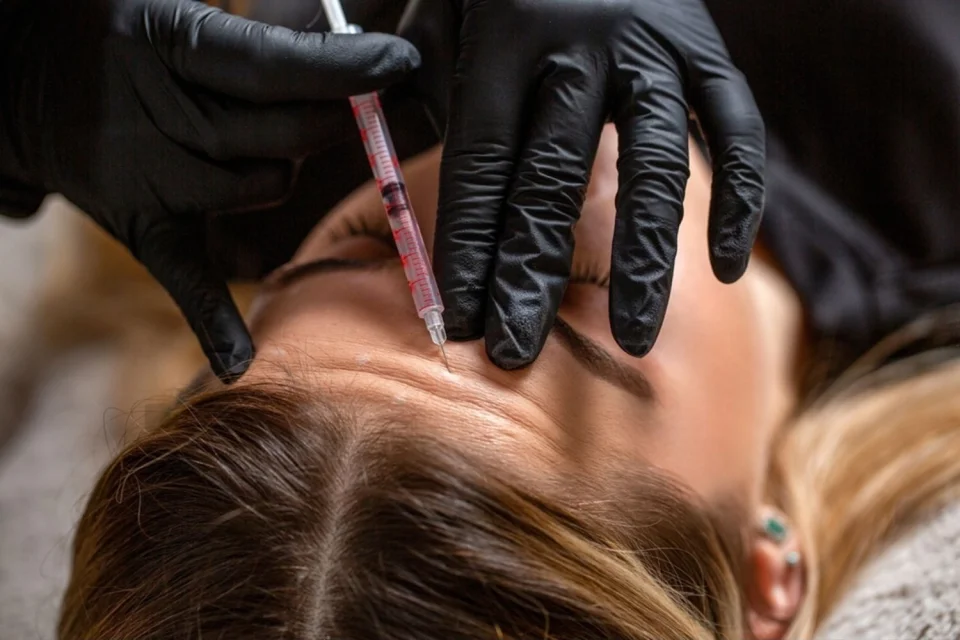
- Forehead (horizontal lines): the lines that form when we raise our eyebrows. The treatment smooths the forehead, giving a more rested appearance.
- Glabella (frown lines / "11" lines): the vertical lines between the eyebrows that form when we frown. Botox here softens a stern expression.
- Crow's feet: the radiating lines that appear outside the eyes when we smile. Treatment rests the gaze without altering expression.
- Upper nose (bunny lines): the small lines that form on the sides of the nose when it wrinkles.
Lower face & neck areas
- Lip lines (smoker's lines): smooths the fine vertical lines above the upper lip, while the Lip Flip technique gently lifts the lip border for a fuller look.
- Around the mouth and chin: corrects downturned "sad" lines at the corners of the mouth and smooths the "orange peel" texture on the chin.
- Masseter muscles (jawline): injection helps narrow the width of the jaw, for a slimmer, more feminine contour.
- Neck (Nefertiti Lift): targets the platysma muscle, softening the appearance of vertical "bands" on the neck and improving the lower jawline.
“A deep understanding of anatomy helps preserve expressiveness.”
Botox for your health too
Beyond its aesthetic applications, Botox is also used as a treatment for conditions such as:
- Hyperhidrosis: applied mainly to three key areas of the body — underarms, palms and soles.
- Chronic migraines: small injections into the forehead, temples, neck and back of the head, following medical assessment and recommendation.
- Bruxism: helps manage teeth grinding, applied to the masseter muscles.
- Cervical dystonia: prevents muscle spasms in the neck and shoulders.
The importance of expertise
Botulinum toxin treatment of the face doesn't change its features or freeze its expressions when applied by a specialised plastic surgeon. A deep knowledge of anatomy helps preserve expressiveness, aiming for a natural-looking, refreshed result. Additionally, the doctor's expertise allows for a proper patient assessment and a treatment tailored to the individual.